DotPhys Home

Category

Astrophysics & Relativity

3 articles

Magnetosphere Under Pressure: The Lorentz Force, Solar Wind, and the Risks of a Weakening Geomagnetic Field

Magnetosphere Under Pressure: The Lorentz Force, Solar Wind, and the Risks of a Weakening Geomagnetic Field

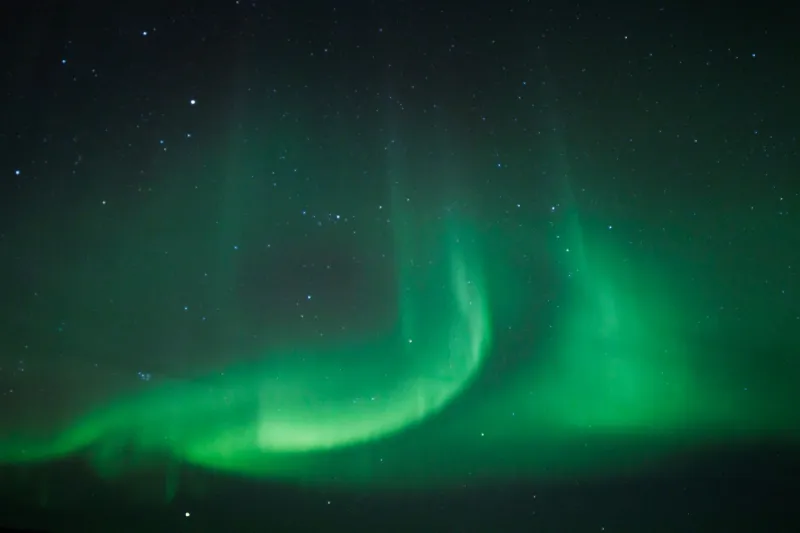
Earth's magnetic field functions as a planetary-scale electromagnetic deflector, redirecting streams of energetic charged particles through the Lorentz force rather than allowing them to reach the surface. Current geophysical data indicate the field is weakening and behaving anomalously in ways that have direct implications for satellite operations, power grid stability, and long-term human exposure to ionizing radiation. This article examines the underlying physics, the evidence for ongoing cha

Relativity as Infrastructure: The Orbital Mechanics and Spacetime Corrections Keeping GPS Accurate to the Meter

Relativity as Infrastructure: The Orbital Mechanics and Spacetime Corrections Keeping GPS Accurate to the Meter

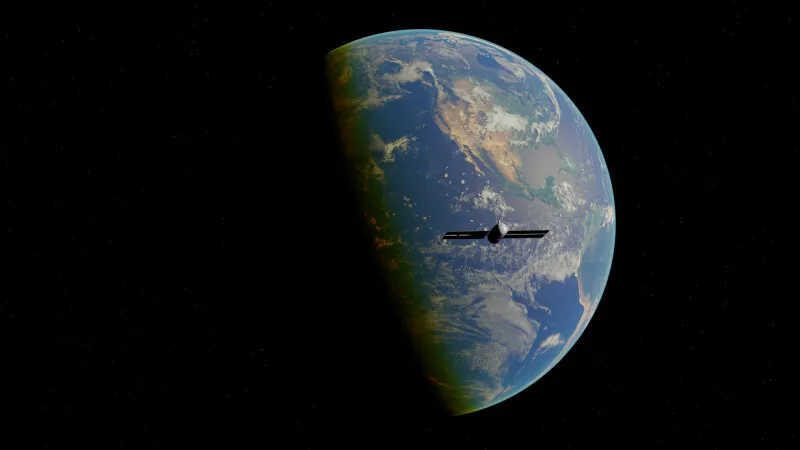
The Global Positioning System — the satellite constellation that underpins navigation on American highways, in commercial aviation, and across military operations — functions only because its engineers incorporated corrections drawn directly from Einstein's theories of special and general relativity. Without continuous adjustment for relativistic time dilation effects that accumulate to approximately 38 microseconds per day, position errors would compound at a rate exceeding six miles daily, ren

Clocks That Crawl: Gravitational Time Dilation, Black Holes, and the Physics of Deep Space Travel

Clocks That Crawl: Gravitational Time Dilation, Black Holes, and the Physics of Deep Space Travel

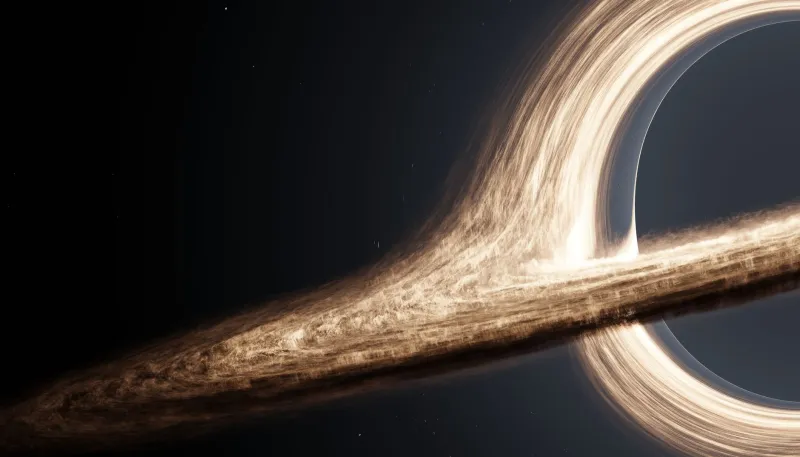
Einstein's General Theory of Relativity predicts that time itself runs slower in stronger gravitational fields — a phenomenon confirmed by experiments here on Earth and observed in the behavior of GPS satellites. For researchers and students examining the theoretical underpinnings of deep space exploration, the implications near black holes and neutron stars are not merely exotic: they raise fundamental questions about what interstellar travel would actually mean for the humans undertaking it.